
For more than two decades, the Nooksack Salmon Enhancement Association (NSEA) has been working to restore the health of Terrell Creek, a shoreline stream that begins at the 200-hectare Lake Terrell in northwest Ferndale and flows over 7.5 miles through agricultural, residential, and conserved landscapes before reaching Birch Bay in Blaine. The Washington Department of Fish and Wildlife manages the Lake Terrell Wildlife Area, a popular site for waterfowl hunting and fishing.
One of the key restoration techniques used in Terrell Creek is the strategic addition of large woody debris (LWD). This practice brings significant benefits to salmon and other aquatic life. LWD creates essential habitat offering places for fish to rest, hide from predators, and conserve energy during their migration. These refuge areas are especially important for returning adult salmon as well as young fry navigating the freshwater environment.
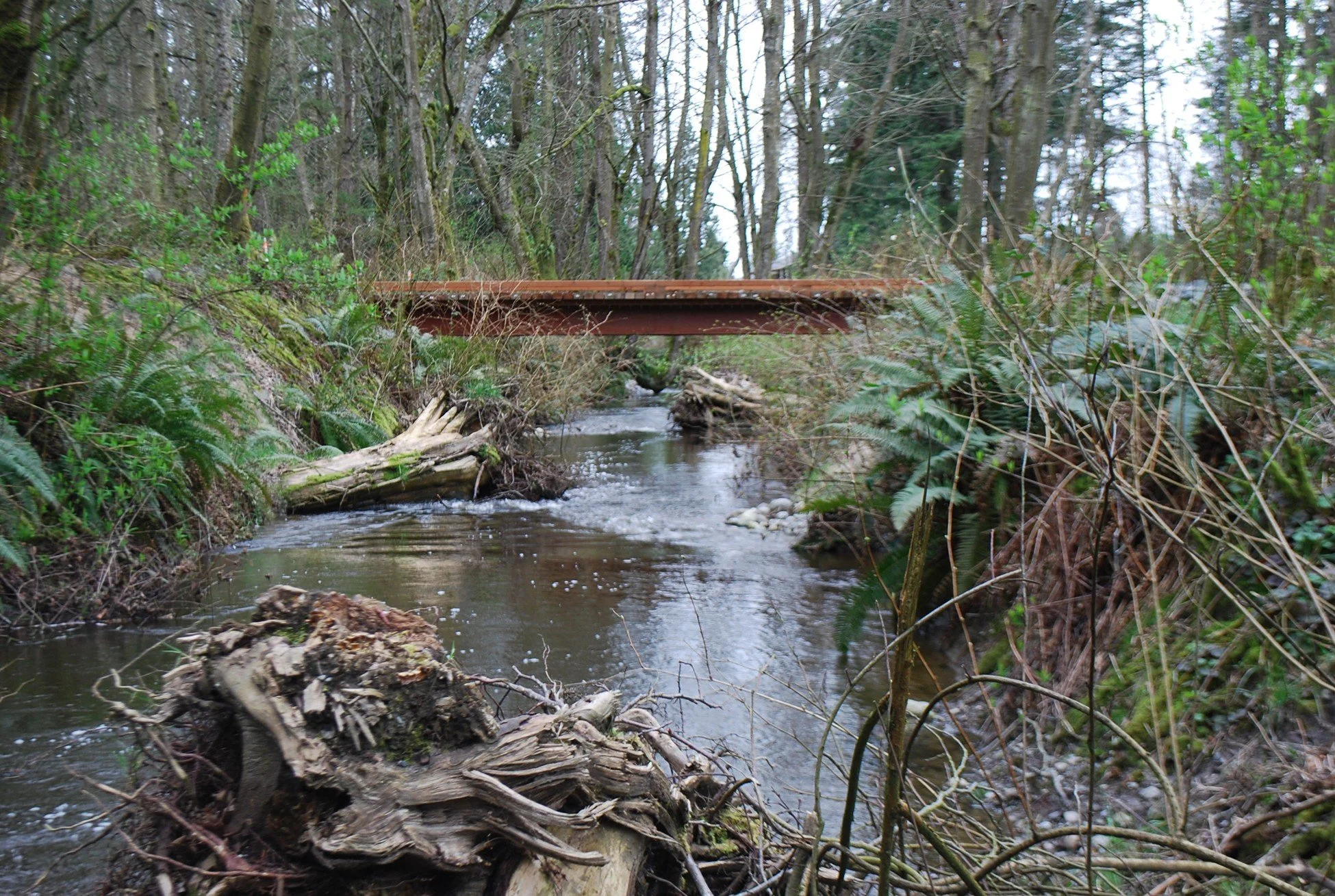
LWD between Aldergrove Rd. and Brown Rd
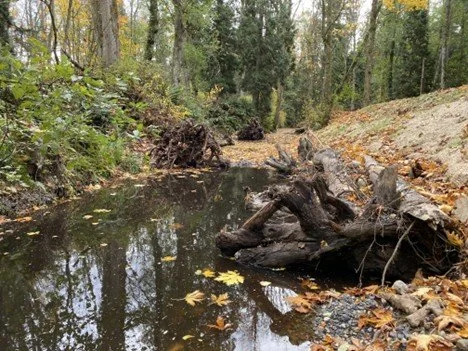
LWD between Aldergrove Rd. and Brown Rd
LWD also plays a vital role in shaping the physical structure of the stream. By altering water flow, the wood encourages the formation of deep pools, helps sort and transport sediment, and can even expose cool groundwater. These changes improve spawning conditions by moving and depositing gravel where salmon can successfully lay eggs.
In some cases, LWD is installed to stabilize banks and reduce erosion. When anchored carefully, it can guide flow away from vulnerable structures or toward areas where reconnecting the stream to its floodplain adds valuable habitat complexity. In Terrell Creek, NSEA has implemented LWD projects that achieve all of these functions—creating a more resilient, diverse, and healthy system for salmon and the broader ecosystem.
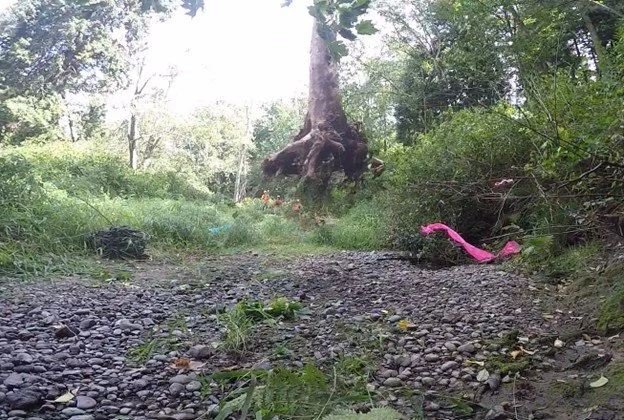
2020 LWD placement by helicopter into Terrell Creek between Kickerville Rd and Jackson Rd
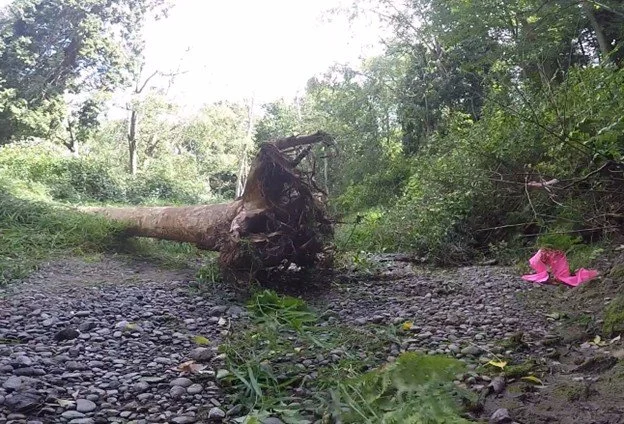
2020 LWD placement by helicopter into Terrell Creek between Kickerville Rd and Jackson Rd
Through long-term commitment and thoughtful restoration practices like these, Terrell Creek is steadily becoming a stronger home for salmon and the community that depends on them.
NSEA has completed the following LWD projects in Terrell Creek:
2003 – 2013: We placed LWD just upstream and downstream of Jackson Rd. This was in partnership with Washington Department of Fish and Wildlife (WDFW) and British Petroleum (BP).
2007 – 2013: We placed LWD just upstream and downstream of Kickerville Rd. This was in partnership with a private landowner and WDFW.
2013: We placed LWD just downstream of Brown Rd. This was in partnership with a private landowner, WDFW and the Whatcom Conservation District.
2014 – 2021: We placed LWD between Aldergrove Rd. and Brown Rd. This was in partnership with multiple private landowners, WDFW, and Birch Bay Watershed & Aquatic Resources Management District (BBWARM).
2020: We placed 200 pieces of LWD by helicopter into Terrell Creek between Kickerville Rd. and Jackson Rd. This project was in partnership with BP, WDFW, and BBWARM.
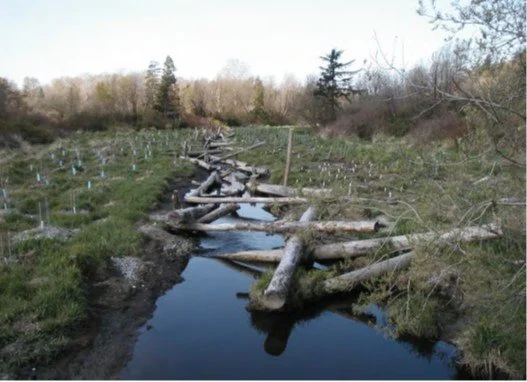
Downstream of Jackson Rd after