
By Sarah Brown, Stewardship Program Manager
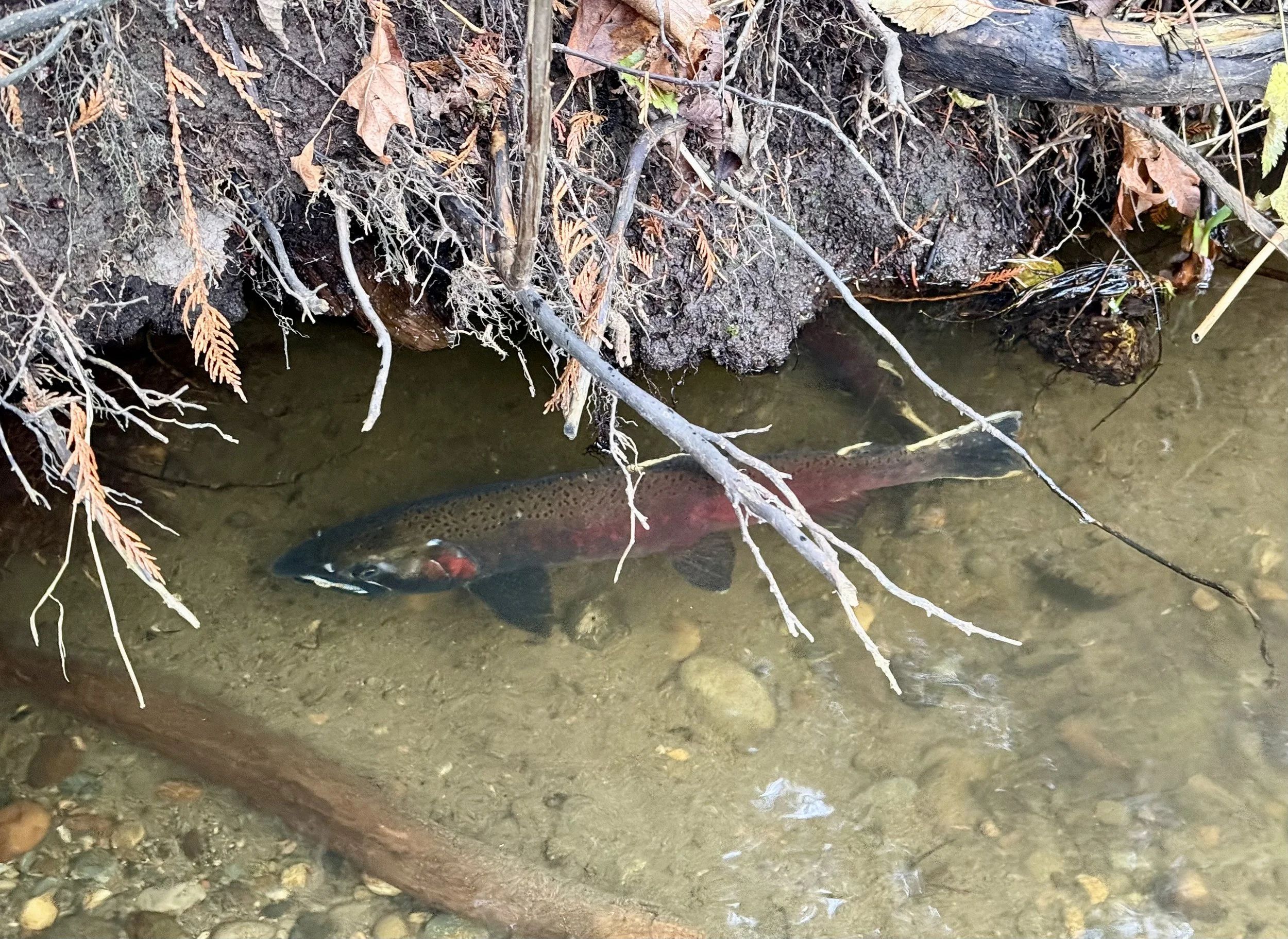
A coho salmon seeks shelter in Deer Creek
In creeks and streams across Whatcom County, tens of thousands of tiny orange eggs lay in gravel nests as Pacific salmon carcasses decompose and provide vital nutrients to the surrounding habitat, marking the completion of their mission to spawn the next generation. The end of this important cycle also marks the end of NSEA’s 2025-2026 Salmon Spotters season, and thus it is a perfect time to reflect on the findings of our dedicated community science volunteers.
The Salmon Spotters program exists to enhance regional understanding of the location, composition, and timing of spawning Pacific salmon in Whatcom County from year to year. While data on local spawning salmon populations exists, it is oftentimes outdated, inconsistent, or conflicts with local knowledge. As environmental factors impact the conditions and accessibility of local waters season to season, our best bet for up-to-date information about spawning salmon is utilizing community volunteers on the ground.
NSEA Salmon Spotter volunteers spent September 2025 to January 2026 venturing out to local creeks and rivers with the mission of viewing and learning more about spawning Pacific salmon. 103 volunteers contributed to more than 580 observations of local creeks and streams across 47 sites throughout Whatcom County, totaling 982 volunteer hours.
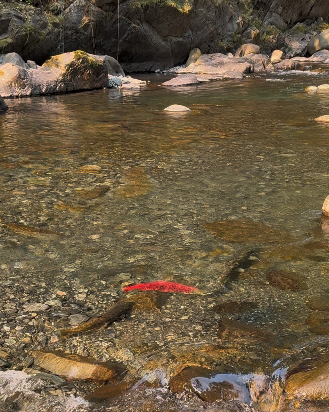
Evidence of the elusive sockeye salmon in Canyon Creek
This season kicked off with an exciting sighting at Canyon Creek, where among a group of spawning Chinook salmon, a Spotter noticed a travelling sockeye salmon. Located in Glacier, WA, Canyon Creek is a tributary of the North Fork Nooksack River, fed by the glacial waters of Mount Shuksan. Although historic accounts report the presence of all five species of Pacific salmon in Canyon creek, sockeye are an elusive sight. Nearly all sockeye salmon are “lacustrine,” which means their life cycle is dependent upon a lake for juvenile rearing. Unlike these lacustrine sockeye runs, Nooksack River sockeye are a small “riverine” population that spawns and rears in the upper reaches of the North and South Forks of the Nooksack River instead of a lake. Due to their small number, it is very rare to catch a glimpse of these unique salmon. NSEA staff were elated to see footage of this special encounter.
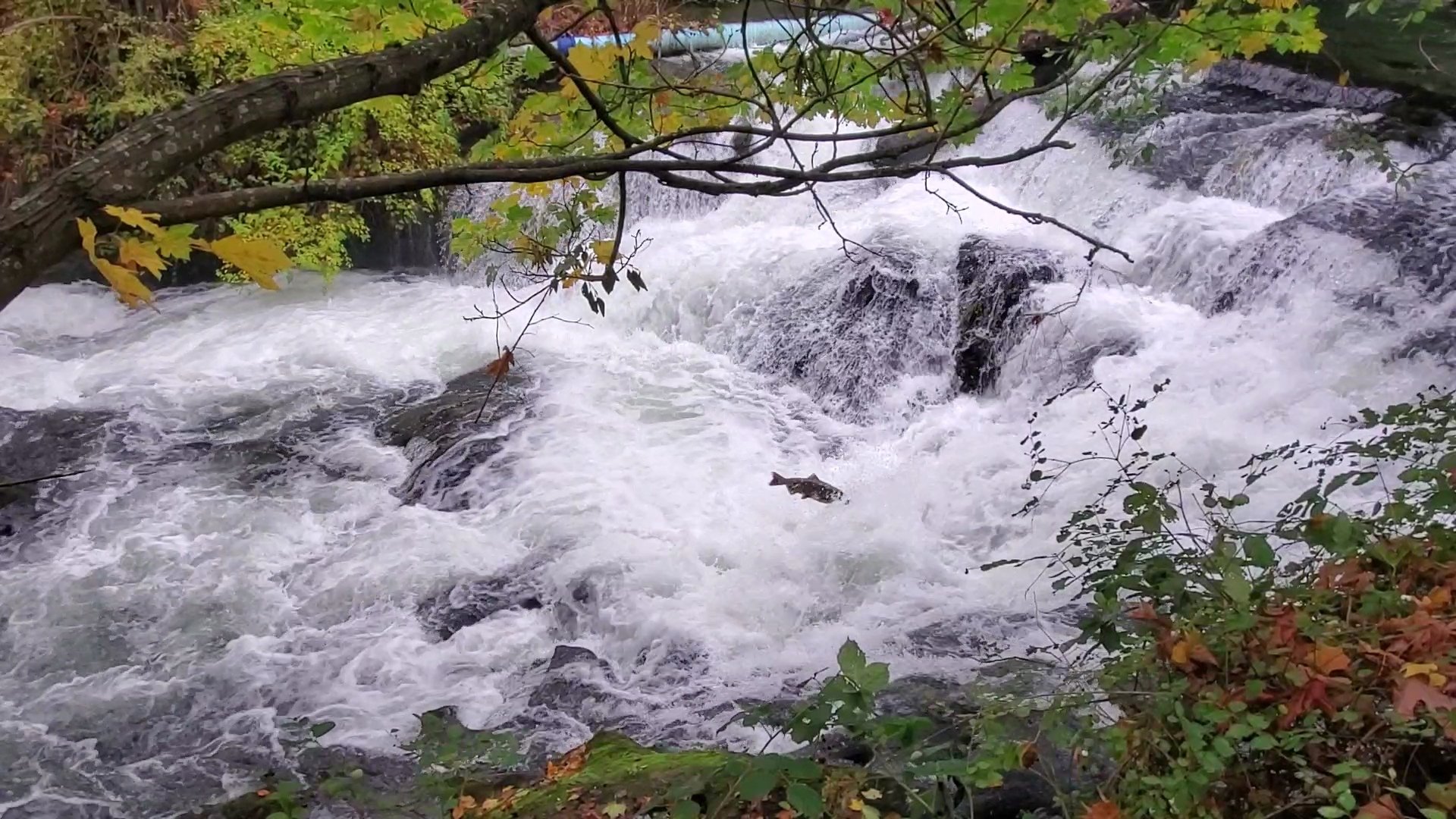
A leaping salmon spotted in Whatcom Creek
From September to December, several creeks that run through downtown Bellingham received exciting returns of Pacific salmon. Chuckanut Creek saw its annual return of chum salmon in early November, with a peak around November 9th. Whatcom Creek is another popular salmon spotting destination, with a variety of publicly accessible trails to the water. This year, 112 observations of Whatcom Creek were made across four primary sites: Ellis Street Bridge, Maritime Heritage Park, Racine Street Bridge, and Whatcom Creek Trail off I-5. Chinook, chum, and coho salmon were all seen spawning in Whatcom Creek throughout late September to mid-December.

A Great Blue Heron enjoys a fish feast in
Deer Creek
Beyond monitoring streams, the Salmon Spotters program allows community members to connect with nature and observe the role of salmon as keystone species up close and personally. One Spotter for Maritime Heritage Park shared, “throughout this project I've watched the geography shift and transform with the season. I've watched the first seals come in through from the bay. I saw groups of Chinook spiraling each other as they swam off downstream. I've seen the heron tuck away in the tree. I've observed the seals hunting and playing behavior.”
Data gathered by Salmon Spotter volunteers aids our understanding of what salmon return to which locations year to year. NSEA recruits and trains Salmon Spotter volunteers annually. Visit our Salmon Spotters webpage to learn more about NSEA’s Salmon Spotters program and see the areas where our volunteers observed salmon.